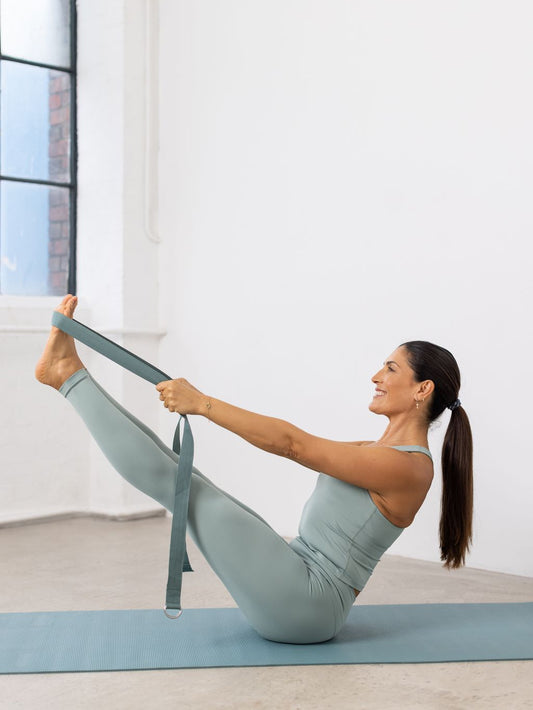
Teacher featured in image: Rebecca Moore
Category: Side-Lying Balance/Hip Opener
Difficulty: Intermediate
Sanskrit: Anantasana (ah-nahn-TAH-sa-na)
Main Focus: Balance, Strength, Flexibility
Props: Belt, Blanket, Blocks
Sleeping Vishnu Pose (Anantasana) is a side-lying balancing yoga pose that strengthens the core, legs and hips while improving balance, flexibility and body awareness. Practised with the body supported on one side and the top leg extended upwards, this pose challenges stability, encourages mindful alignment and develops control through steady breathing. Suitable for practitioners with an established yoga practice, Sleeping Vishnu Pose is commonly found in Hatha, Iyengar and Vinyasa Yoga sequences as both a balancing and hip-opening posture. Using props or modifying the leg position can make the pose more accessible while still providing many of its strengthening and stretching benefits.
Preparing the hips, hamstrings and legs before practising Sleeping Vishnu Pose can help create more space and ease in the final posture. These poses encourage flexibility and mobility while introducing some of the movements used in Anantasana.
Standing Hand to Big Toe Pose (Utthita Hasta Padangusthasana) – Stretches the hamstrings and prepares the legs for the extended position in Anantasana.
Bound Angle Pose (Baddha Konasana) – Opens the hips and inner thighs, helping to improve mobility before practising Anantasana.
After practising Sleeping Vishnu Pose on both sides, counterposes can help release areas that have been working and bring the body back into a comfortable, neutral position. Gentle floor-based poses allow the spine, hips and legs to relax after the balance.
Corpse Pose (Savasana) – Allows the body to return to a neutral, symmetrical position after lying and balancing on one side.
Supine Twist (Supta Matsyendrasana) – Gently releases the spine, hips and lower back after the side-lying balance.