Headstand (Sirsasana)
Category: Inversion / Balance
Difficulty: Advanced
Sanskrit/Pronunciation: Sirsasana (sheer-SHAH-suh-nuh)
Main Focus: Shoulders, Arms, Core, Upper Back, Balance
Props: Yoga Mat, Blanket, Yoga Bricks, Yoga Belt
Headstand (Sirsasana) is an advanced inversion that combines upper-body strength, core stability and balance. Practised with the head lightly grounded and the forearms pressing firmly into the floor, the hips and legs lift until the body extends vertically. The pose requires control through the shoulders, arms and core, and is best approached gradually, with preparatory poses and props helping to build the strength, alignment and confidence needed for the full expression.
- Begin in a kneeling position and interlace your fingers, placing forearms on the mat, elbows shoulder-width apart
- Place the crown of your head on the mat, cupped gently by your hands
- Tuck your toes, lift your knees, and walk your feet closer to your head
- Engage your core and slowly lift both legs up towards the ceiling (bend knees and lift one leg at a time if needed)
- Keep the body in one long line, shoulders away from ears, gaze steady
- Hold for 10–30 seconds to start, gradually building up with practice
- To come down, slowly lower both legs with control
- Increases blood flow to the brain, improving focus and clarity
- Strengthens shoulders, arms, and core
- Stimulates the lymphatic and endocrine systems
- Can help relieve mild depression, stress, and fatigue
- Practise at a wall for support and confidence while learning
- Use a folded blanket under the forearms or head for cushioning
- Build strength and alignment with Dolphin Pose first
- Avoid if you have neck, shoulder, or high blood pressure issues
- Keep legs tucked or one foot grounded until you feel ready to progress


Props to Support Headstand (Sirsasana)
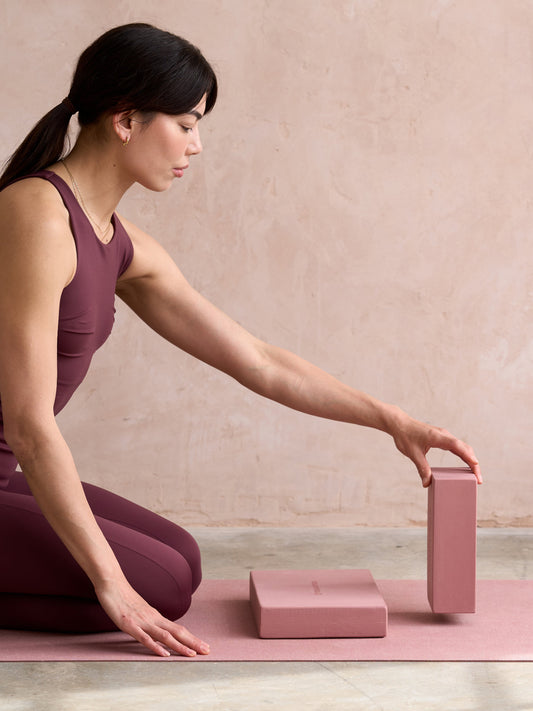
Props can provide additional support while developing strength, alignment and confidence in Headstand. Practise near a wall for support as you become familiar with balancing upside down. Yoga bricks can be placed beneath the feet to raise the floor as you progress from lifting one foot at a time to lifting both feet. Foam blocks can also be stacked against a wall and positioned beneath each shoulder to provide support around the shoulders and create more space for the neck.