5 Ways to Use the Form: Small Rectangular Buckwheat Bolster
Yogamatters
A versatile yoga essential, the Form Rectangular Buckwheat Bolster combines supportive functionality with a clean, considered design. With its classic rectangular shape and slightly more streamlined proportions, it's a reliable companion across a wide range of practices.
Here are some ways to use this new addition to our bolster family in your practice:
.png?v=1787818159026)
.png?v=1787818235202)
The Corpse Pose - Savasana
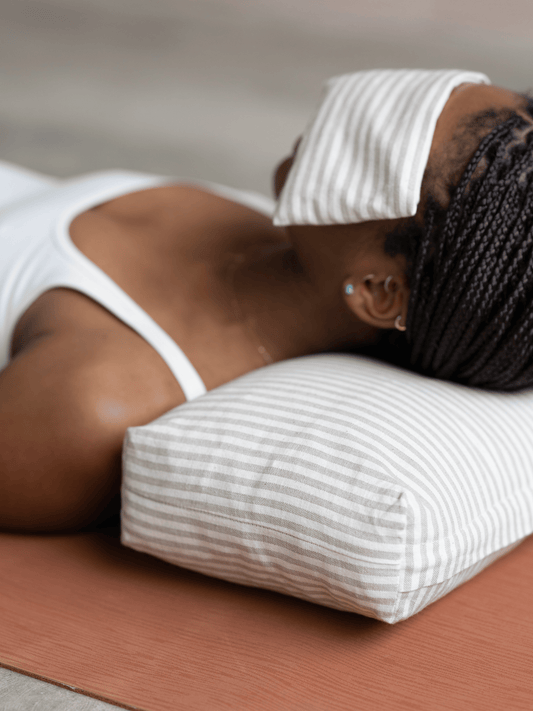
When used underneath the head in relaxation poses such as Savasana, the contour of the Form supports the neck and head releasing tension throughout the whole body. This prop targets tension in the neck, shoulders and upper back. It’s a perfect way to end your practice and your day!
1. Come to lying down. Consider placing a bolster at the back of your knees.
2. Slide the Form into the curve of your neck and adjust the base of the skull upwards so the back of the neck is long.
3. Adjust the shoulder blades down the back and lengthen the tail of your spine down away from the head.
4. Allow the body to melt into the support of gravity and the ground.
5. Stay for a minimum of 5 minutes.

Revolved Abdominal Posture - Jathara Parivartanasana
Spinal rotation can relieve back tension and rejuvenate especially if you’ve been sitting all day! The Form can offer support for the knee. It allows for a more easeful rotation and avoids stress across the back of the pelvis and in the shoulder. Flip it on its tall side for even more ease and support.
1. Come to lying down. Consider placing a blanket underneath your head and position the Form to your left.
2. Shift your pelvis a little to the right and draw the right knee into the torso.
3. Inhale your breath, on the exhale draw the right knee and shin down to rest on the Form. (Turn it on its side if your knee doesn’t reach.)
4. Turn the chest towards the right and encourage the right shoulder to soften back towards the floor.
5. Stay for 2 or 3 breaths.
6. Gently come out of the rotation and rest evenly on your back for a few breaths. Repeat on the other side.

Reclining Bound Angle Posture - Supta Baddha Konasana
Reclining Bound Angle Posture provides a wonderful way to stretch the hips and open the front of the body. When placed widthways across the back, the Form offers a more restful back arch that release tension in the gut while stretching the shoulders. After a long day, this rejuvenating pose can reset the nervous system and refresh.
1. Come to sitting. Place the form widthways behind you. With the knees bent, carefully lie back over the bolster so that it supports both your lower and upper back. Rest your head on the floor or on a blanket.
2. Open the knees out to the side and bring the soles of the feet together.
3. Take hold of your elbows and stretch the arms over the head.
4. Take a few deep breaths, then change the cross of the arms.
5. After another few breaths, release the arms down. Use your hands to help draw the knees back together.
6. Carefully roll off the Form onto your side and stay there a short while supporting your head with the Form.
7. Gently press the the top hand into the floor, and keeping the gaze down, slowly come up from the side.

Pigeon Pose - Eka Pada Rajakapotasana
Pigeon pose offer an effective way to release tension in your hips. Tight hips often make this pose difficult to perform. With the Form placed underneath the bent knee hip, the pose becomes accessible enabling a longer holding that addresses tightness in a way the body can receive. (If there is knee injury, avoid this pose.)
1. Come onto to all fours placing the Form to your right.
2. Slide the right knee forward. Pull the Form underneath the right buttock and sit back onto the bolster shifting the right foot over to the left.
3. Turn the pelvis to face forwards and roll the left thigh inwards a little.
4. Use your hands to help lengthen the torso upwards into a soft spinal extension.
5. Stay for 3 or 4 breaths.
6. To come out, walk your hands forward and pull the Form to the side and come back onto all fours.
7. Repeat on the other side.

Thunderbolt Pose - Vajrasana
When placed underneath the knees, Thunderbolt pose stretches the thighs, shins and tops of the feet. It’s an effective way to rejuvenate the legs after sitting all day. It is also a great stretch to prepare for walking or running. (If there is knee or foot injury, avoid this pose.)
1. Come onto all fours with the Form placed under the knees.
2. Slowly sit back onto your heels.
3. If the buttock bones don’t reach the heels, try placing a blanket in between the the heels and your pelvis.
4. Rest your hands on your thighs. Relax the shoulders down and move them back and lift the chest.
5. Take 2 to 3 breaths.
6. To come out, shift back onto fours and stretch one leg back at a time to release the knees.

Shoulder Stretch in Child’s Pose - Balasana
This variation of Child’s Pose addresses tight shoulders, particularly after a long day at the screen. With the Form strategically placed underneath the elbows, not only are the shoulders given some extra TLC, but the variation in Child’s Pose also stretches the back and releases the neck. The pose is calming.
1. Come to sitting on your heels with the Form place about a foot in front of you.
2. Place your elbows on the Form. Bring the hands together in a prayer position and soften the back of your neck.
3. Part the knees a little.
4. Wrap the outer edge of your uppers arms towards the floor.
5. Lengthen the tail of your spine down towards the heels and spread your back ribs towards the ceiling. Keep some resistance in the armpits and maintain a soft curve to your spine..
6. If you wish to increase the stretch, bring the thumbs towards the back of your head.
7. Take 2 or 3 deep breaths. On the exhale, soften and lengthen through the sides of the torso.
8. Release the arms downs, place your hands on the floor, inhale and walk the hands back to come up.